


Previewing the 2025–2026 Supreme Court Term
Breaking Down This Year's Docket
CLE
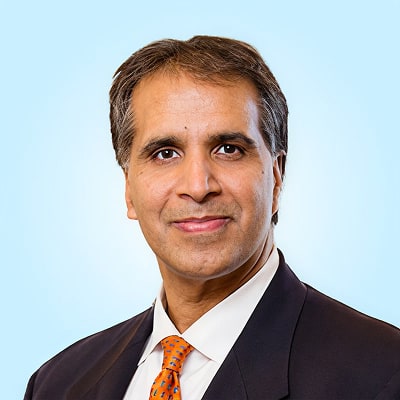

Vikram Amar
UC Davis School of Law
Michael Dorf
Cornell Law School


Previewing the 2025–2026 Supreme Court Term: Breaking Down This Year's Docket
Professors Vikram Amar and Michael Dorf return for another engaging preview of the upcoming 2025–2026 Supreme Court Term. The discussion will explore matters on the current docket, such as redistricting and racial gerrymandering, transgender sports cases, the expedited IEEPA tariff challenge, Colorado’s conversion therapy case, and “presidential removal power.”
Topics covered include:
Agenda:
Read More
›
- Overview of the 2024–2025 Supreme Court Term
- What did the Supreme Court do last term? How will this term compare?
- Exploration of Cases
- Professors will discuss the docket for the upcoming Supreme Court Term, providing their legal insights and opinions
- Cases may include:
- Louisiana v. Callais
- Little v. Hecox
- West Virginia v. B.P.J.
- Donald J. Trump v. V.O.S. Selections
- Learning Resources v. Donald J. Trump
- Chiles v. Salazar
- “Presidential Removal Power”
- Other Interesting Cases and Q&A
- Professors will answer questions from the audience regarding cases, their insights, etc.
Duration of this webinar:
60 minutes
Originally broadcast:
October 8, 2025 12:00 PM PT
Webinar Highlights
This webinar is divided into section summaries, which you can scan for key points and then dive into the sections that interest you the most.
Professors Vikram Amar and Michael Dorf will discuss key cases from the upcoming and previous Supreme Court terms. Amar and Dorf provide a brief overview of the cases they will cover.
Trump v. Casa limited the ability of federal district judges to issue universal injunctions, impacting remedial questions in other cases. Skrmetti upheld Tennessee's ban on gender-affirming care, avoiding the question of heightened scrutiny for transgender status discrimination. Mahmoud v. Taylor allowed parents to opt-out of LGBTQ+ inclusive curricula, potentially disrupting public education. The court's emergency docket was active over the summer, with cases involving President Trump's executive orders and immigration authority. The speakers anticipate significant cases in the current term, including those involving birthright citizenship and executive orders.
The discussion focuses on the presidential removal authority and the separation of powers, referencing Humphrey's Executor and the unitary executive theory. The Wilcox case involved the removal of members of independent agencies, with the court seeming to favor the government's position. Trump v. Slaughter questions the constitutionality of removal protections for FTC members and the potential overruling of Humphrey's Executor. The Cook case involves the president's effort to remove Lisa Cook from the Federal Reserve Board, raising questions about procedural due process. The court's decision in these cases could impact the independence of agencies and the president's removal authority.
The birthright citizenship executive order challenges the interpretation of the 14th Amendment's citizenship clause. The order requires at least one parent to be a citizen or permanent resident for a child born in the U.S. to gain citizenship. The order's prospective application is a matter of executive grace, not inherent in the constitutional theory. The court is expected to rule against the administration's interpretation. The discussion highlights the potential impact on citizenship and the legal arguments against the executive order.
The Court this term will consider the Voting Rights Act and race-conscious decision-making, specifically the constitutionality of considering race in districting to remedy disparate impact discrimination against racial minority groups. The distinction between racial classifications and race-conscious decision-making is crucial in the court's analysis. The court's decision could impact affirmative action and the use of race in university admissions and districting. The discussion references past cases like Allen v. Milligan and the potential shift in the court's approach to race-conscious policies. The outcome could redefine the extent to which race can be considered in legal and policy decisions.
The conversion therapy case, Chiles v. Salazar, challenges Colorado's ban on conversion therapy as a free speech issue. The court is likely to apply strict scrutiny to the law, questioning the regulation of professional conduct through speech. The discussion includes the potential implications for similar laws. The transgender athlete cases involve state bans on transgender girls in sports, raising equal protection and Title IX issues. The court will consider whether laws discriminating on transgender status are subject to heightened scrutiny. The outcome could impact the legal treatment of transgender individuals and the application of equal protection principles.
Please note this AI-generated summary provides a general overview of the webinar but may not capture all details, nuances, or the exact words of the speaker. For complete accuracy, please refer to the original webinar recording.
Speakers
Vikram Amar
Distinguished Professor of Law
UC Davis School of Law
UC Davis School of Law
Vikram Amar is a Distinguished Professor of Law at UC Davis, and was previously the dean and the Iwan Foundation Professor of Law at the University of Illinois, Urbana-Champaign College of Law from 2015-2023. Amar has also taught law at Berkeley School of Law, Hastings College of Law and UCLA School of Law. Amar is one of the most eminent and frequently cited authorities in constitutional law, federal courts, and civil procedure. He has written several books and more than 60 articles in leading law reviews. He is a co-author (along with Akhil Reed Amar) of the upcoming revised multi-volume Treatise on Constitutional Law (West Publishing Co.) pioneered by Ron Rotunda and John Nowak. Read More ›
Michael Dorf
Professor of Law
Cornell Law School
Cornell Law School
Michael C. Dorf teaches constitutional law, federal courts, and related subjects at Cornell Law School. He has authored or co-authored six books and over one hundred scholarly articles and essays for law journals and peer-reviewed science and social science journals. He also writes a bi-weekly column for Justia’s Verdict and publishes a popular blog, Dorf on Law. Dorf received his undergraduate and law degrees from Harvard. Read More ›
Continuing Legal Education (CLE) Credits
*CLE credit is only available to Justia Connect Pros. Not a Pro? Upgrade today>>
California CLE
Status: Approved
Format: On-Demand
Credits: 1.00 General
Earn Credit Until: June 30, 2028
New Jersey CLE
Status: Approved
Format: Live (Virtual), On-Demand
Credits: 1.20 General
Earn Credit Until: October 7, 2026
Texas CLE
Status: Approved
Format: On-Demand
Credits: 1.00 General
Earn Credit Until: September 30, 2026
This presentation is approved for one hour of General CLE credit in California. This program has been approved by the Board on Continuing Legal Education of the Supreme Court of New Jersey for 1.20 hours of total CLE credit. This course has been approved for Minimum Continuing Legal Education credit by the State Bar of Texas Committee on MCLE in the amount of 1.00 credit hours.
Justia only reports attendance in jurisdictions in which a particular Justia CLE Webinar is officially accredited. Lawyers may need to self-submit their certificates for CLE credit in jurisdictions not listed above.
Note that CLE credit, including partial credit, cannot be earned outside of the relevant accreditation period. To earn credit for a course, a lawyer must watch the entire course within the relevant accreditation period. Lawyers who have viewed a presentation multiple times may not be able to claim credit in their jurisdiction more than once. Justia reserves the right, at its discretion, to grant an attendee partial or no credit, in accordance with viewing duration and other methods of verifying course completion.
At this time, Justia only offers CLE courses officially accredited in certain states. Lawyers may generate a generic attendance certificate to self-submit credit in their own jurisdiction, but Justia does not guarantee that lawyers will receive their desired CLE credit through the self-submission or reciprocity process.
Looking for CLE credit?
Visit CLE Dashboard

Watch Related Videos
CLE
Vikram Amar
UC Davis School of Law
Michael Dorf
Cornell Law School
Key Rulings From the 2025–2026 Supreme Court Term
Breaking Down the Bench
Watch Now

Become a Member to Watch This Webinar
* CLE credit is only available to Justia Connect Pro members.
Free Justia Connect Memberships are available to lawyers, other legal professionals, students, and all law enthusiasts.
Log In NowNot a Member? Get Connected for Free
* CLE credit is only available to Justia Connect Pro members.
CLE
Charles H. Kuck
Kuck Baxter LLC
Greg Siskind
Siskind Susser, PC
Landmark Immigration Battles Against the Trump Administration
Watch Now
Become a Member to Watch This Webinar
* CLE credit is only available to Justia Connect Pro members.
Free Justia Connect Memberships are available to lawyers, other legal professionals, students, and all law enthusiasts.
Log In NowNot a Member? Get Connected for Free
* CLE credit is only available to Justia Connect Pro members.
CLE
Michael Dorf
Cornell Law School
Vikram Amar
UC Davis School of Law
Key Rulings From the 2024–2025 Supreme Court Term
Breaking Down the Bench
Watch Now
Become a Member to Watch This Webinar
* CLE credit is only available to Justia Connect Pro members.
Free Justia Connect Memberships are available to lawyers, other legal professionals, students, and all law enthusiasts.
Log In NowNot a Member? Get Connected for Free
* CLE credit is only available to Justia Connect Pro members.
CLE
Vikram Amar
UC Davis School of Law
Michael Dorf
Cornell Law School
Breaking Down This Year's Docket
Previewing the 2024–2025 Supreme Court Term
Watch Now
Become a Member to Watch This Webinar
* CLE credit is only available to Justia Connect Pro members.
Free Justia Connect Memberships are available to lawyers, other legal professionals, students, and all law enthusiasts.
Log In NowNot a Member? Get Connected for Free
* CLE credit is only available to Justia Connect Pro members.


